
Nicomachean Ethics
Aristotle · Ancient · Philosophy
Enlightenment · Ethics
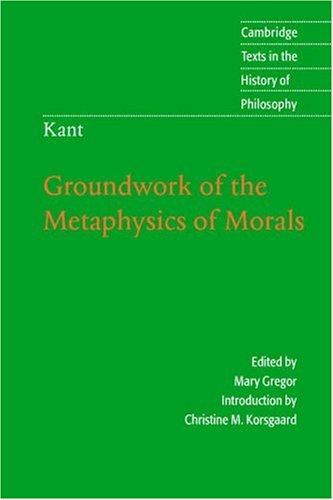
by Immanuel Kant. Kant develops the categorical imperative and treats rational persons as autonomous ends rather than mere means.
Find a print edition
Browse Bookshop.org's current catalog to choose an available edition.
Some purchase links are affiliate links. We may earn a commission at no additional cost to you.
Author reading order
Begin with What Is Enlightenment? for Kant's compact account of intellectual maturity. Move next to the Groundwork for his moral vocabulary, then approach the Critique of Pure Reason with those stakes already in view.
Explore the Immanuel Kant starting guideContinue exploring
Kant develops the categorical imperative and treats rational persons as autonomous ends rather than mere means.
This work is included on the basis of broader great books. Its cataloged influence level is 5 out of 5.
Aristotle · Ancient · Philosophy
John Stuart Mill · Victorian · Philosophy / economics
Friedrich Nietzsche · 19th Century · Philosophy
Continue through a deliberately ordered journey that places this work in conversation with others.
A century of works that gives the broadest useful first view of the Western canon. 100 books · Advanced.
A ten-work route through virtue, political order, self-command, knowledge, morality, liberty, and the critique of inherited values. 10 books · Advanced.